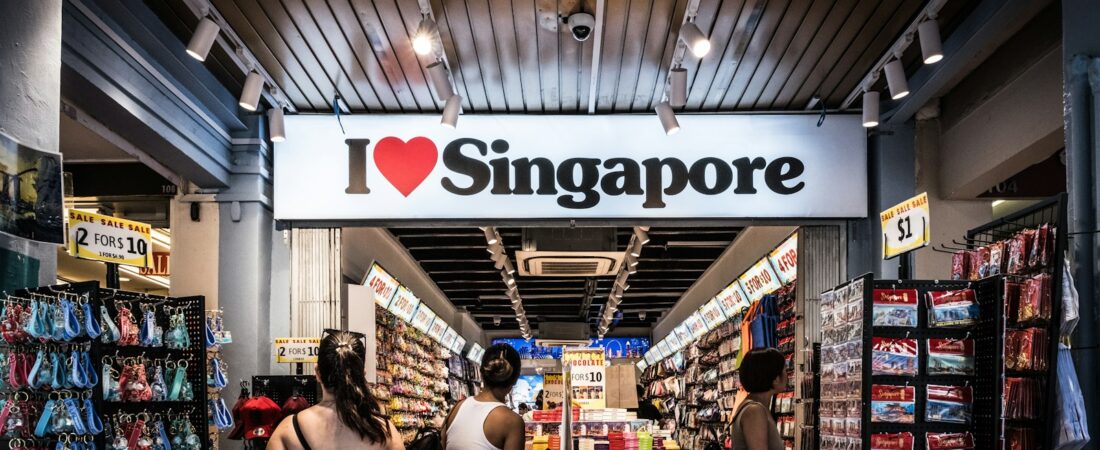
Three-quarters of Singapore’s SME retailers have the basics covered. Digital payments, a Facebook page, maybe a Lazada store running alongside the physical shop. That is the good news.
The uncomfortable part: that’s also the median level. Most retailers stopped there, and the gap between “takes PayNow” and “runs AI-assisted operations” has been widening every quarter. The government has noticed.
On May 26, 2026, Enterprise Singapore (EnterpriseSG) and the Infocomm Media Development Authority (IMDA) launched an updated Retail Industry Digital Plan (IDP), specifically targeting over 2,000 SME retailers for technology advancement. This isn’t a brochure refresh. The plan was restructured from scratch — moving away from readiness stages and toward a business-touchpoint model that organizes tools around how a retail operation actually runs.
This article covers what changed, which specific AI-enabled solutions are now included, what two real Singapore retailers achieved after implementation, how to access the associated grants, and what you should actually do next. One detail worth flagging upfront: the PSG grant closes September 29, 2026. That is two weeks from the date of this article.
Why 75% Isn’t the Success Story It Looks Like
According to IMDA’s 2025 annual survey, 75% of Singapore SME retailers have adopted entry-level digital solutions. Just under half — 45% — have moved to intermediate tools. Advanced technology adoption remains limited and largely unmeasured because so few have reached it.
That top-line number gets cited as progress. It’s accurate but misleading.
Entry-level digital means you take PayNow, you have an Instagram account, and maybe you’re on Shopee. Intermediate means you have a basic retail management system or a rudimentary e-commerce backend. Neither positions you for the next three years of AI-driven consumer behaviour shifts. Neither is what the refreshed Retail IDP is designed to address.
The AI Adoption Hole in Singapore Retail
The gap at the advanced level is significant. Only 28.5% of Singapore firms have begun any AI integration. Just 3.8% have fully embedded AI into core processes, according to Marketing-Interactive’s coverage of the Retail Reimagined event (May 2026). In a sector where consumer expectations are moving toward personalization, instant inventory answers, and frictionless checkout, a retailer still managing stock on spreadsheets and reordering by gut feel is running on borrowed time.
The refreshed plan is designed to close that gap — but only if retailers know what’s in it and how to act on it.
What Actually Changed in the 2026 Retail Digital Plan
The previous Retail IDP organized solutions by digital readiness stage — beginner, intermediate, advanced. Logical in theory. In practice, it meant retailers had to self-diagnose where they sat before knowing which solutions applied to them — a friction point that often stopped the conversation before it started.
The 2026 refresh reorganizes everything by business touchpoint: Front-of-House, Back-of-House, and Corporate Operations. You identify where your operational problem sits, not where you think you rank on a readiness scale. Then you find the relevant solution category. It’s a more honest structure for how SME owners actually think about their businesses.
Front-of-House: Serving Customers in the Age of AI
This is where AI concierge systems come in. The plan includes GenAI-powered chatbots for personalized product recommendations and customer engagement — tools that don’t require a senior staff member to be physically present to deliver a quality interaction.
The sub-sectors specifically targeted include supermarkets and convenience stores, fashion and sporting goods, consumer electronics, department stores, jewellery and timepieces, and furniture and household products, per IMDA’s Retail IDP programme documentation (2026). If your business sits in any of these categories, there are pre-approved solutions mapped to your operation type.
Back-of-House: From Inventory Guesswork to Demand Forecasting
AI-driven demand forecasting for inventory optimization is the anchor of the back-of-house section. If you’re a retail SME still ordering stock based on what sold well last year, or what the sales rep told you was popular, you’re either carrying dead inventory or running out of the wrong things at peak periods. Both are margin problems with compounding consequences.
The plan includes demand forecasting tools that integrate with retail management systems to enable predictive stock replenishment rather than reactive reordering. For businesses running physical stores alongside online channels simultaneously, getting inventory right across both is not simple — and getting it wrong repeatedly is the difference between a profitable quarter and a cash flow crisis.
Corporate Operations: Marketing and Training That Scales
Generative AI for marketing and sales content generation is now explicitly part of the plan — a notable addition. For small retailers who can’t afford a marketing team but are expected to maintain active social media presence, run promotions, and produce product descriptions at volume, this closes a real capability gap.
The plan also includes GenAI digital training systems — tools that help staff access product information, answer customer questions accurately, and develop skills without requiring a dedicated training coordinator. For retailers with high staff turnover or seasonal hiring patterns, the value of a system that can get a new hire up to product knowledge speed quickly is not trivial.
What Two Singapore Retailers Have Already Achieved
The plan wasn’t launched theoretically. Two Singapore retailers were cited at the Retail Reimagined – From Now to Next event as examples of what AI adoption actually produces in a retail context, with specific measured outcomes.
Far East Flora: Three Wins From One Digital Push
Far East Flora, one of Singapore’s best-known floristry and gifting retailers, rolled out AI tools across multiple operational areas. The results, cited by Senior Minister of State Low Yen Ling at the Retail Reimagined event (May 2026), were specific:
- Self-checkout systems reduced cashier workload by 30-40%
- An AI-assisted marketing solution increased returns by an estimated 5-10% without additional marketing spend
- Generative AI for content creation cut production time by at least 50%
That last figure deserves attention. If your store produces product descriptions, promotional copy, or social content on any regular cadence, a 50% reduction in production time compounds quickly across a year. That’s time that can go back to the floor, to customer service, or to the business owner’s actual strategic thinking — none of which happens when someone is rewriting product copy for the third time this week.
The Canary Diamond Co: Voice-Powered Staff Intelligence
The Canary Diamond Co demonstrates a less-obvious AI application: staff training and in-the-moment product support. Their AI-powered digital training system gives staff real-time inventory access and product information through voice commands — with confidence scores and improvement reports for individual staff development generated automatically.
For a jewellery retailer where staff expertise directly influences the sale, a system that gives a new hire real-time product intelligence during a live customer conversation is a different order of magnitude from a product training binder. It also reduces the cognitive load on experienced staff who currently field every difficult product question in-store.
The Retail Accelerator — A Different Kind of Support
Alongside the IDP, EnterpriseSG is running a Retail Accelerator at L^IFE by Innovate360. Sixteen early-stage local retail brands are placed at Level 1 of *SCAPE in a two-year integrated incubator programme.
The support package includes subsidized retail space, structured mentorship, and programmes covering marketing, PR, merchandising, and livestreaming, plus pathways to internationalization. This is primarily for brands in early stages rather than established SMEs managing operations at scale. But it signals where the policy direction is heading: developing the next generation of local retailers, not just helping existing ones cope with digitalization pressure.
How to Access the Funding — The PSG Timeline That Matters Right Now
The Retail IDP’s recommended solutions are supported by the Productivity Solutions Grant (PSG), which co-funds up to 50% of qualifying costs for pre-approved solutions.
PSG applications close on September 29, 2026. After that date, support transitions to the new EDGE Grant programme with different terms and eligibility criteria that are not yet fully finalized. If you have been trialling a PSG-eligible solution on a free plan and have been delaying the formal application, this is the window closing. For a full breakdown of what PSG covers for digital solutions, see our guide: PSG Grant for Digital Marketing Singapore 2026: What Is Covered and How to Apply.
IMDA also provides complimentary digital consultancy and project management services to eligible SMEs — including digital readiness assessments and tailored technology recommendations — at no cost. Before committing to any platform purchase, request a readiness assessment from IMDA’s SME Centre. The assessment is free. The vendor conversations after it are more productive when you have an independent view of where your gaps actually sit.
Applications go through the Business Grants Portal at businessgrants.gov.sg. Have your CorpPass and company UEN ready before starting the application.
Keith Kwai: The Gap Most Retail SMEs Are Missing
Retail is the sector I encounter most often where the distance between “thinking about digital” and “actually running something digital” is widest. I want to be specific about what I mean, because the pattern repeats across enough businesses that it’s worth naming directly.
Most retail SME owners I work with know they should do something. They’ve been to the webinar — possibly more than one. They’ve downloaded the plan. Some have had a conversation with a vendor at a trade show. A few have started a free trial. Then six months pass and nothing changes operationally. The tool isn’t deployed. The grant isn’t applied for. The workflow is exactly the same.
Here is why, in my experience: the conversation starts at the wrong end. Someone explains the grant percentage, walks through the platform features, shows the dashboard demo. The retailer nods along. But what the retailer is actually thinking — and usually doesn’t say out loud — is: “If I spend two days implementing this, what exactly changes about how my staff manages stock?” That question almost never gets answered in the vendor conversation, because the vendor is talking about the product, not about the operational workflow the product is supposed to improve.
The Far East Flora case study in the official plan is more valuable than it appears at first glance — not because it’s a recognizable local brand, but because it names specific outcomes. A 30-40% reduction in cashier workload. A 50% cut in content production time. A 5-10% lift in marketing returns without additional spend. These are outcomes a retail SME owner can reason about. “Does this apply to my operation?” is a question you can answer when outcomes are stated that concretely.
I recently worked with a fashion accessories retailer who had been evaluating an AI demand forecasting tool for four months. The blocker wasn’t the cost — PSG would have covered 50% of it — and it wasn’t the technology complexity. The blocker was that nobody had worked out what happened after the tool was installed. Who sets the forecasting parameters? Who reviews the replenishment suggestions before the order goes out? Who has authority to override the AI’s recommendation when a seasonal product isn’t behaving as predicted? These are not technical questions. They are operational questions. The tool stays undeployed until someone works through them first.
So here’s what I’d suggest before you engage with any vendor in the Retail IDP framework: spend one afternoon with whoever actually manages your inventory, your customer communications, or your staff onboarding — whichever touchpoint you’re targeting. Map out what they do today, step by step. Then identify the specific step the AI tool replaces or accelerates. If you can’t name that step precisely, you’re not ready to implement. If you can name it, you have a project with a clear scope — and that’s a conversation you can have with a vendor and with IMDA’s consultancy team that produces something useful.
The plan itself is well-structured. The grants are real and the PSG deadline is genuine. What the government cannot do is answer the operational question for you. That stays your job.
Three Actions Worth Taking This Week
The PSG deadline is two weeks away. Everything after September 29 falls under the incoming EDGE Grant framework, which is still being finalized. Acting now means acting on known terms.
Map one operational pain point before talking to vendors. Pick the touchpoint where your team loses the most time — inventory, customer communications, content production, staff training. Spend an hour documenting the current process step by step. That becomes your brief for the vendor conversation and the IMDA consultancy call alike.
Request a free digital readiness assessment from IMDA. The SME Centre provides independent assessments and solution recommendations at no cost to eligible SMEs. This is the clearest way to understand which IDP-approved solutions actually fit your operation’s current stage. Don’t skip this in favour of going straight to vendors — the assessment changes the quality of those conversations significantly.
Submit your PSG application before September 29 if you’re ready. Log into the Business Grants Portal with CorpPass, confirm your eligibility (Singapore-registered, minimum 30% local shareholding, annual revenue under S$100M or fewer than 200 staff), and start the application. For SMEs who want to understand what operational automation looks like before committing to a specific platform, 5 Repetitive Tasks Singapore SMEs Should Automate First gives a practical framework for identifying where to start.
Senior Minister of State Low Yen Ling put it plainly at the Retail Reimagined event: “The retailers who thrive will be those who know their customers well, reach them through the right channels, and use technology to improve efficiency while keeping the human touch.” That’s not a vision statement for 2030. It’s a description of what competitive retail looks like in Singapore right now — and the plan to get there is already published and funded.
Sources: EnterpriseSG and IMDA, Retail Industry Digital Plan media release (May 26, 2026); Ministry of Trade and Industry, Speech by Senior Minister of State Low Yen Ling at Retail Reimagined – From Now to Next (May 26, 2026); IMDA 2025 Annual SME Survey; Marketing-Interactive, “Singapore refreshes retail digital plan to boost AI adoption among SMEs” (May 2026); IMDA Retail IDP programme documentation (2026).
About the Author
Keith Kwai is an independent consultant helping Singapore SMEs with digital transformation, AI adoption, and workflow automation. He has 25 years of marketing and digital experience across global MNCs including Motorola, Singtel, Creative Technology, Epson, and Scholastic International. He builds and deploys agentic AI systems — not just advises on them. Connect at keithkwai.com or LinkedIn.